Our child got a fever on holiday in Kyoto: finding a clinic that could see us
By the Call Japan team · · 3 min read
A family from Australia was three days into a Kyoto trip when their four-year-old woke up with a fever. Most clinics nearby only took appointments by phone in Japanese. Here is how they got seen the same morning, and what you should know before it happens to you.
The situation
This is not medical advice
This is an illustrative scenario based on the kinds of requests we handle. In an emergency in Japan, call **119** for an ambulance. We book appointments; we do not give medical advice.
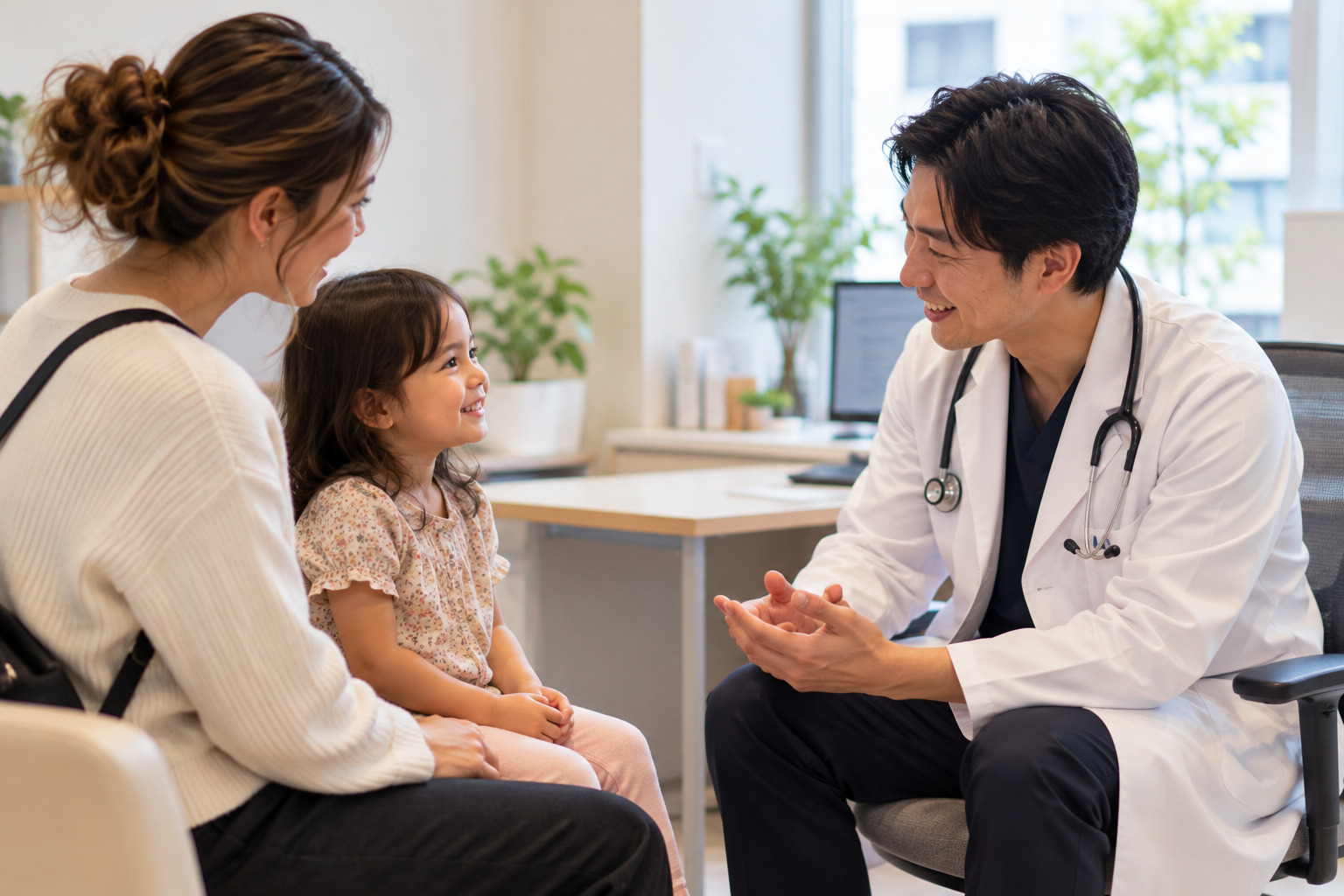
The Nguyen family were staying in a rental apartment near Shijō in Kyoto. On the third night their son Leo, four, had a temperature of 38.5°C and was not eating. It was not an emergency, but they wanted a doctor to check him in the morning before deciding whether to keep travelling.
Their hotel's front desk was not available because they were in a rental flat. Searching online found several pediatric clinics (小児科, shōnika) nearby, but the websites were in Japanese, opening hours varied by day and most said appointments were by phone or through a Japanese-only booking system.
What they sent us
At 7:15 am, Leo's mum sent us a WhatsApp message. The information that mattered most for the call was:
- The patient's age, main symptoms and how long they had lasted
- The apartment's location, and that they could travel up to 20 minutes by taxi
- That they had travel insurance but no Japanese health insurance card
- That they would pay at the clinic and claim back from their insurer later
- That Leo had no known allergies and was not on any medication
Being upfront about having no Japanese insurance matters. Clinics will almost always see foreign patients, but they need to know in advance that you will pay the full cost yourself (自費, jihi) so they can prepare the right forms.
How the calls went
Most clinics open their phone lines at 8:30 or 9:00 am. We called the nearest pediatric clinic as soon as it opened. Its morning slots were already full, which is normal on a weekday in cold and flu season. The second clinic, about ten minutes away by taxi, could see Leo at 10:15 am.
- Request4歳の子どもが38度5分の熱があります。今日診ていただけますか?Yon-sai no kodomo ga sanjūhachi-do go-bu no netsu ga arimasu. Kyō mite itadakemasu ka?My four-year-old has a fever of 38.5°C. Could you see him today?
- Insurance日本の保険証はありませんが、自費で大丈夫です。Nihon no hokenshō wa arimasen ga, jihi de daijōbu desu.We don't have Japanese health insurance, but we'll pay ourselves.
- Language英語は少しでも大丈夫ですか?Eigo wa sukoshi demo daijōbu desu ka?Is it okay if we speak a little English?
The receptionist asked whether Leo had been around anyone with flu, and asked the family to wear masks and tell reception when they arrived so they could wait in a separate area. This is standard for patients with a fever in Japan.
What to bring to a clinic in Japan
- Passport for every patient. Clinics use it to register you.
- Cash. Many small clinics do not take cards. A first visit for a child without insurance commonly costs several thousand yen, plus any medicine.
- Masks if anyone has a fever or cough.
- A short written list of symptoms, when they started, temperature readings and any medicine already given.
- Your travel insurance details, and ask the clinic for a receipt (領収書, ryōshūsho) and, if your insurer needs it, a medical certificate.
Medicine is usually given at a pharmacy next to the clinic, using a prescription the clinic hands you. Pharmacies often have simple English leaflets for children's medicine.
The result
By 9:20 am the family had the clinic's name, address, map link, appointment time, what to bring and a short Japanese note explaining Leo's symptoms to hand to reception. The doctor diagnosed a common virus, prescribed fever medicine and told them to rest for a day.
They stayed in Kyoto an extra night and moved the next part of the trip. We made that call too, to their ryokan in Hakone. For the full do-it-yourself steps, read our guide on how to see a doctor in Japan as a foreigner.